
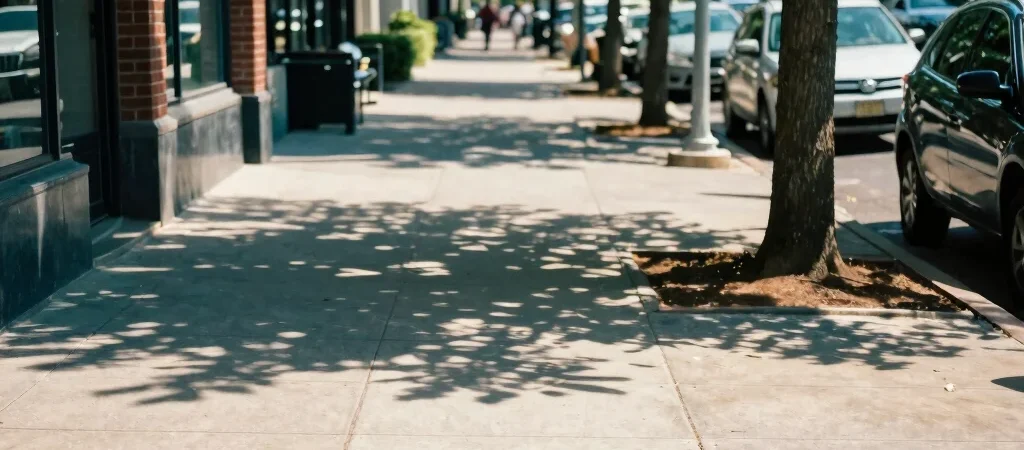
On a summer afternoon, the sunny side of a city block can feel punishing, while a few steps beneath a tree bring immediate relief. That change is not just in your imagination: the canopy interrupts direct sunlight before it reaches your skin, the pavement, and nearby walls.
Shade changes the surface
Sunlit pavement absorbs energy and warms up; a shaded patch receives much less direct solar radiation. The tree's shade can also keep a building wall or parked car from heating as strongly, changing the conditions right where people walk.
This is why the position of a tree matters. A canopy over a busy sidewalk offers a different kind of relief from one set back behind a fence, even if both trees are healthy and leafy.
Leaves move water too
Trees also release water vapor through their leaves in a process called transpiration. That process uses energy, contributing to cooling around the plant, though its effect depends on conditions such as water availability, humidity, and airflow.
So a young, sparsely leafed tree may not offer the same shade as a broad canopy, and a tree under drought stress may behave differently from one with enough water. The cooling a person feels on a walk is shaped by both the shade overhead and the surrounding street.
Look at the whole block
The U.S. Environmental Protection Agency's urban heat island resources offer a useful next read on how shade, vegetation, and built surfaces fit together. On your next hot walk, notice where the canopy falls and which surfaces it protects. A tree cools a street most visibly where its leaves meet the path people actually take.